 English
  ខ្មែរ
ខ្មែរ 

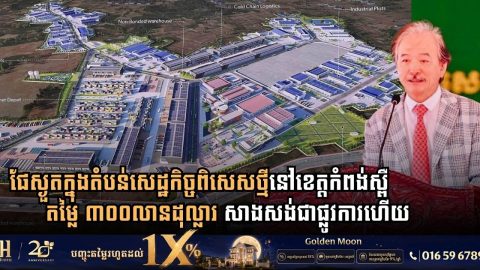
Joint-Venture Cambodia SuperPort Breaks Ground on $300 Million SEZ in Kampong Speu
- 8 September 2026

Developed by Singapore’s YCH Group and Cambodia’s Sear Brothers Investments, the 132-hectare dry port and industrial complex aims to modernize supply chains and elevate regional trade competitiveness Cambodia has officially commenced construction on a $300 million dry port and Special Economic Zone in Kampong Speu province, marking a major milestone in the Kingdom’s transport and […]
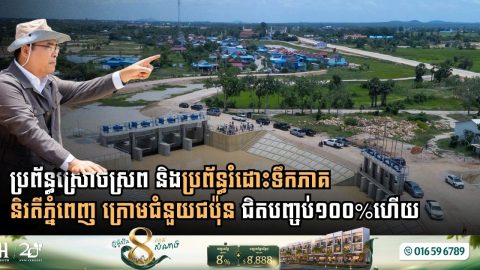
Japan-Funded 20,000-Hectare Southwest Phnom Penh Irrigation Scheme Nears 99% Completion
- 13 August 2026
Inspected by Water Resources Minister Thor Chetha, the major JICA infrastructure project across Kampong Speu, Kandal, and Takeo promises to boost rice yields for nearly 8,000 farming families Agricultural productivity and flood management southwest of Cambodia’s capital are set for a major transformation as the Rehabilitation and Improvement of Irrigation and Drainage Systems Project in […]
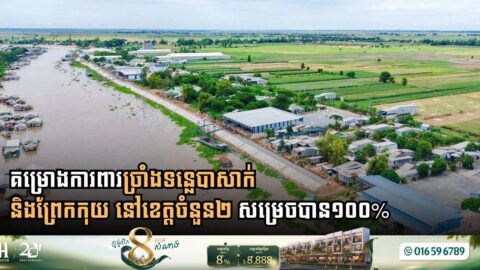
Bassac and Prek Koy Riverbank Protection Projects Achieve 100% Completion Across Kandal and Kampong Cham
- 12 August 2026
Cambodia’s water infrastructure development achieved a key milestone as two major riverbank protection projects along the Bassac River and Prek Koy stream reached 100% completion across Kandal and Kampong Cham provinces. An inter-ministerial working group led by HE Sot Rasmei, Secretary of State and Chairman of the Procurement Committee at the Ministry of Water Resources […]
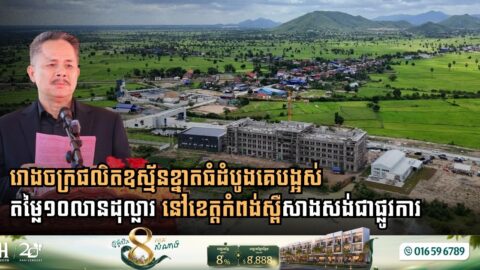
Jinding Air Liquefaction Breaks Ground on $10 Million Industrial Gas Plant in Kampong Speu
- 10 August 2026
Cambodia’s industrial supply chain achieved a major milestone with the official groundbreaking of the nation’s first large-scale industrial gas production facility in Kampong Speu province. Valued at over $10 million, the flagship project developed by Jinding Air Liquefaction (Cambodia) Co., Ltd. officially commenced construction on July 2, 2026, during a ceremony presided over by Kampong […]
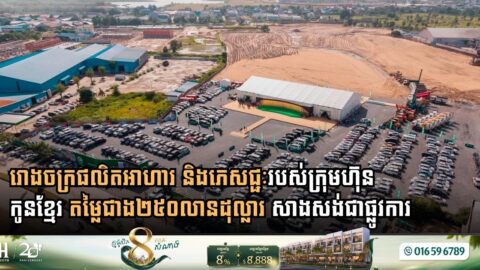
Chip Mong Breaks Ground on $250 Million Food and Beverage Production Complex in Phnom Penh
- 8 August 2026
Domestic manufacturing in Cambodia achieved a major milestone as local conglomerate Chip Mong officially broke ground on a state-of-the-art food and beverage production facility valued at over $250 million. The groundbreaking ceremony held on August 1, 2026, was presided over by Samdech Men Sam An, Privy Councillor to His Majesty the King, in Khan Dangkao, […]
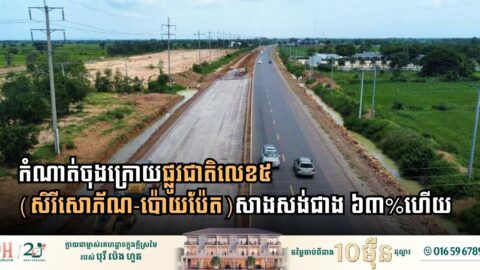
Final Section of Cambodia’s National Road 5 Reaches Major Construction Milestone
- 20 July 2026
Achieving over 63 percent completion, the vital Serei Sophorn to Poipet corridor paves the way for seamless international trade and regional connectivity by 2027 The ambitious transformation of Cambodia’s transport network is rapidly nearing its final triumph as the restoration and quality upgrade of National Road 5 enters its last leg. By the end of […]