 English
  ខ្មែរ
ខ្មែរ 


Selfie Travel Asia Eyes Resumption of Direct Tourist Flights Between Astana and Sihanoukville
- 26 October 2026
A major aviation and tourism player seeks government support to reactivate its direct travel route connecting Kazakhstan’s capital to Cambodia’s coastal hub, boosting bilateral visitor exchanges. Efforts to bolster Cambodia’s tourism sector received fresh momentum as Selfie Travel Asia expressed its firm desire to resume direct passenger flight services between the Kazakhstani capital of Astana […]

Cambodia and Toyota Partner to Accelerate Automotive Manufacturing and Skills Training
- 26 October 2026
A high-level strategic meeting between the Council for the Development of Cambodia and Toyota Tsusho highlights collaborative plans for incentive reforms, local component sourcing, and a new technical training initiative. Cambodia’s ambitions to expand its burgeoning automotive assembly sector received a fresh boost as the Council for the Development of Cambodia (CDC) and Toyota Tsusho […]

Bentley’s Year in Infrastructure Awards Opens in Singapore With a New Format, New Host, and 36 Finalists
- 25 October 2026
The people shaping the world’s infrastructure deserve an experience as extraordinary as the work they do. This year, Bentley built one. Bentley’s Year in Infrastructure Awards opened in Singapore with a new look. Now in its 22nd year, the event often called the “Oscars of Infrastructure” has a new host, a new keynote format, and […]
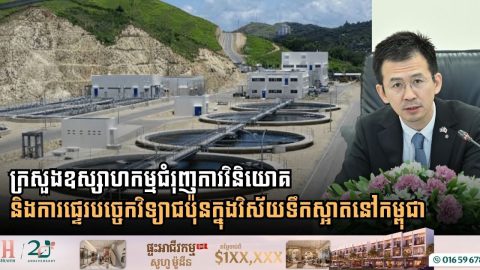
Driving Japanese Investment and Technology Transfer in Cambodia’s Clean Water Sector
- 25 October 2026
Phnom Penh, October 7, 2026 — His Excellency Hem Vanndy, Minister of Industry, Science, Technology, and Innovation, welcomed a delegation from Kitakyushu City, Japan, led by Deputy Mayor Keisuke Tachi, to deliberate on expanding cooperation in clean water supply, technology transfer, and strategic investment. The high-level meeting underscored water security as a foundational pillar for […]
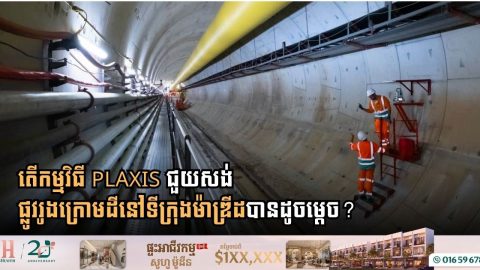
PLAXIS 2D Helps Model Madrid’s Traditional Tunnel Construction Method
- 24 October 2026
Engineers have developed a methodology using PLAXIS 2D to simulate tunnels built with the Traditional Method of Madrid (TMM), offering a faster alternative to complex three-dimensional analyses. Used in the Madrid Metro since 1917, the TMM divides tunnel excavation into small sections, typically less than 5 square meters. Each section is temporarily supported with timber […]
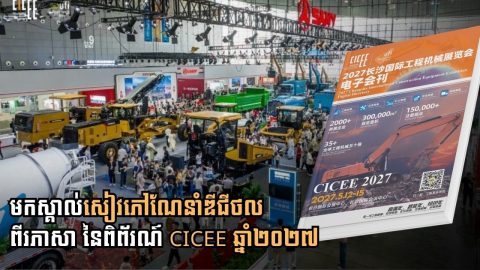
CICEE Connecting Buyers in 23 Countries, Generating 3.287 Million Impressions
- 24 October 2026
How the 2027 CICEE Bilingual Digital Directory Opens Global Business Opportunities for Exhibitors Reaching 23 countries—including the United States, Germany, Russia, Spain, Italy, India, Türkiye, Indonesia, Singapore, Thailand, Vietnam, Malaysia, Cambodia, Myanmar, the Philippines, Laos, Brunei, Nigeria, Kenya, South Africa, Argentina, Zimbabwe and Nepal—the directory delivered targeted exposure to 1.009 million professionals across the construction […]