 English
  ខ្មែរ
ខ្មែរ 


PLAXIS 2D Helps Model Madrid’s Traditional Tunnel Construction Method
- 24 October 2026
Engineers have developed a methodology using PLAXIS 2D to simulate tunnels built with the Traditional Method of Madrid (TMM), offering a faster alternative to complex three-dimensional analyses. Used in the Madrid Metro since 1917, the TMM divides tunnel excavation into small sections, typically less than 5 square meters. Each section is temporarily supported with timber […]

How Bentley Software Is Helping Keep Mumbai’s Massive Sea Bridge on Track
- 17 October 2026
Mumbai’s Versova-Bandra Sea Link (VBSL), a 17.17-kilometer, eight-lane bridge set to become India’s second-longest, is being built with the help of digital project management software designed to keep a hugely complex construction effort organized and on schedule. Once finished, the bridge will connect Versova to Bandra and is expected to cut commute times sharply for […]
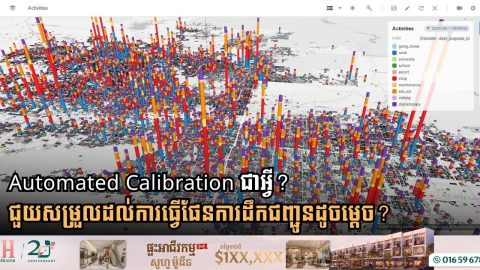
Automated Calibration Streamlines Travel Demand Modeling
- 16 October 2026
Automated calibration is helping transportation planners make travel demand modeling faster, more efficient and responsive to changing travel patterns. Traditionally, calibrating travel demand models required months of manual adjustments to ensure model results matched real-world data such as traffic counts, transit ridership and household travel surveys. Automated calibration simplifies the process by using optimization algorithms […]

Digital Workflows Could Help Geothermal Energy Finally Scale Up
- 11 October 2026
Digital technologies are helping transform geothermal energy development by making projects more efficient, scalable and easier to manage, according to a recent industry analysis. Geothermal energy provides a reliable, low-emission source of power that can operate around the clock, unlike renewable sources that depend on weather conditions. However, high upfront costs, exploration uncertainty and the […]

Can AI Help Solve the World’s Engineering Shortage?
- 10 October 2026
The infrastructure industry is facing a growing shortage of engineers even as demand for bridges, roads, power networks, and other projects continues to rise. Bentley Systems is turning to artificial intelligence to help engineers work faster while keeping human expertise at the center of critical decisions. Bentley’s approach combines AI’s ability to understand language, reason […]

Bentley Systems Announces Winners of the 2026 Year in Infrastructure Awards
- 9 October 2026
New cycle of AI-enabled innovation is helping engineers solve harder problems faster SINGAPORE – (The Bentley Systems 2026 Year in Infrastructure Event) – October 7, 2026 – Bentley Systems, Incorporated (Nasdaq: BSY), the infrastructure engineering software company, today announced the winners of the 2026 Year in Infrastructure Awards. For more than 20 years, the awards have […]