 English
  ខ្មែរ
ខ្មែរ 


Cambodia’s $3 Billion Aircraft Deal Marks a New Era in US-Cambodia Aviation Cooperation
- 14 August 2026
Strategic investments, a landmark $3.2 billion Boeing fleet acquisition, and regional logistics plans mark a major leap forward in bilateral trade and infrastructure development… Phnom Penh, Cambodia – The aviation relationship between the United States and Cambodia continues to reach new operational milestones, driven by massive capital investments, commercial aircraft agreements, and expansive infrastructure developments […]

WorldBridge Group and Cambodia Airports Partner for Major Logistics Hub in Sihanoukville
- 30 July 2026
Cambodia’s transport and logistics sector has reached a transformative milestone as two corporate powerhouses join forces to establish a premier multimodal trade hub in coastal Preah Sihanouk province. On July 21, 2026, Cambodian conglomerate WorldBridge Group and Cambodia Airports, a subsidiary of global operator VINCI Airports, signed a strategic Memorandum of Understanding to conduct a […]

United States Pledges $100 Million to Techo International Airport and Explores Investments in Canal-Linked Ports
- 30 June 2026
Landmark agreement between DFC and OCIC signals deepening economic engagement as Cambodia’s award-winning aviation hub secures strategic American backing In a transformative step for Cambodia’s infrastructure landscape, the Overseas Cambodian Investment Corporation, known widely as OCIC, has signed a Letter of Intent with the United States International Development Finance Corporation, or DFC, for a strategic […]

Cambodia Aviation Sector Maps Growth in Flight Operations and Cargo Amid Shifting Passenger Volumes
- 25 May 2026

Cambodia’s aviation sector saw mixed results in the first four months of 2026, with flight frequencies and air cargo experiencing notable growth while overall passenger numbers faced a slight decline. According to the State Secretariat of Civil Aviation, the country’s three main international airports handled a total of 23,204 two-way flights from January through April, […]
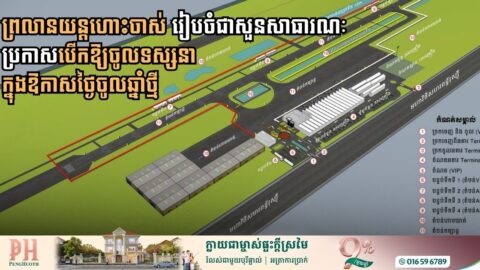
Historical Gateway Transformed: Phnom Penh’s Former Airport to Open as Public Park for Khmer New Year
- 14 April 2026
The iconic site of the former Phnom Penh International Airport, widely known as Pochentong, is set to begin a new chapter as a trial public park, offering residents a unique space for recreation and cultural reflection. According to an announcement from the inter-ministerial committee tasked with managing the kingdom’s former aviation hubs on April 6, […]

How Smart Software Connects Colombia’s Most Remote Towns
- 11 March 2026

Colombia’s state-owned airline, SATENA, is now using advanced engineering software to make life-saving flights safer and more frequent. While most people think of infrastructure as physical things like bridges or roads, SATENA uses a tool called Bentley MicroStation to build “invisible” roads in the sky. In the rugged mountains and dense jungles of Colombia, a […]