 English
  ខ្មែរ
ខ្មែរ 


Polish Firm IM Capital Holding Sets Sights on Expanding Hospitality and Real Estate Investments in Cambodia
- 28 October 2026
During a high-level meeting with Prime Minister Hun Manet, company leadership proposed establishing a bilateral chamber of commerce and exploring diversified tourism packages to deepen economic and cultural ties. Poland-based IM Capital Holding has formally expressed its intent to expand its investment portfolio within Cambodia’s hospitality and real estate sectors. The strategic plan was revealed […]
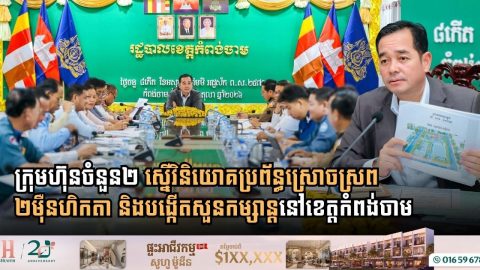
Kampong Cham Prepares for Major Development with Proposed Children’s Park and 20,000-Hectare Irrigation Projects
- 28 October 2026
Provincial authorities review landmark investment proposals from two private firms aimed at boosting local tourism, enhancing agricultural infrastructure, and driving regional economic growth. Kampong Cham province is poised for significant infrastructural and recreational enhancements following a formal review of two major private investment proposals by the provincial administration. The updates were highlighted by Un Chanda, […]
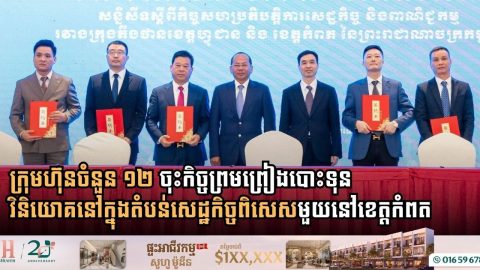
Twelve Companies Sign Investment Agreements to Fuel Growth at Kampot Special Economic Zone
- 27 October 2026
A high-level trade conference led by Kampot Provincial Governor Mao Thonin secures major commitments from Chinese enterprises, paving the way for expanded industrial development in Chum Kiri district. Kampot province’s economic landscape is set for a significant expansion following the official signing of investment agreements by twelve companies slated to set up operations within the […]
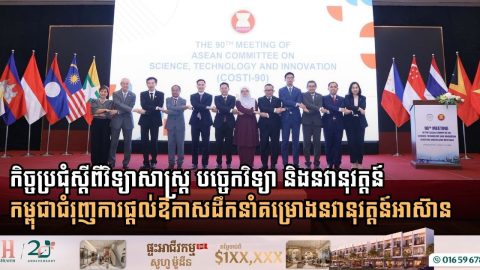
Promoting Inclusive Leadership in ASEAN Innovation: Cambodia Advocates for Equitable Regional Project Management
- 27 October 2026
The 90th COSTI Meeting in Vietnam Sets a Collaborative Vision for Artificial Intelligence, Quantum Technology, and Regional Scientific Advancement Vietnam: Advancing a strong stance on regional equity, Cambodia has called for greater leadership opportunities for developing ASEAN member states in regional projects during the 90th meeting of the ASEAN Committee on Science, Technology, and Innovation […]
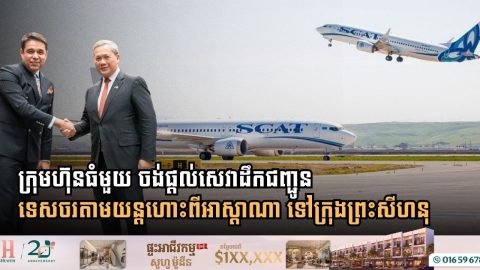
Selfie Travel Asia Eyes Resumption of Direct Tourist Flights Between Astana and Sihanoukville
- 26 October 2026
A major aviation and tourism player seeks government support to reactivate its direct travel route connecting Kazakhstan’s capital to Cambodia’s coastal hub, boosting bilateral visitor exchanges. Efforts to bolster Cambodia’s tourism sector received fresh momentum as Selfie Travel Asia expressed its firm desire to resume direct passenger flight services between the Kazakhstani capital of Astana […]
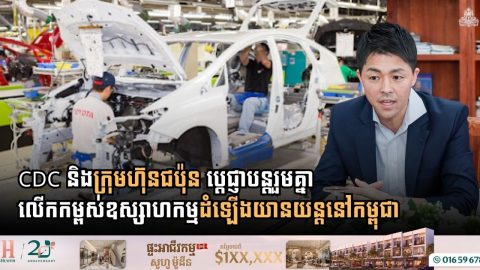
Cambodia and Toyota Partner to Accelerate Automotive Manufacturing and Skills Training
- 26 October 2026
A high-level strategic meeting between the Council for the Development of Cambodia and Toyota Tsusho highlights collaborative plans for incentive reforms, local component sourcing, and a new technical training initiative. Cambodia’s ambitions to expand its burgeoning automotive assembly sector received a fresh boost as the Council for the Development of Cambodia (CDC) and Toyota Tsusho […]