Why Don’t We Build the World’s Largest Solar Farm in the Sahara Desert?

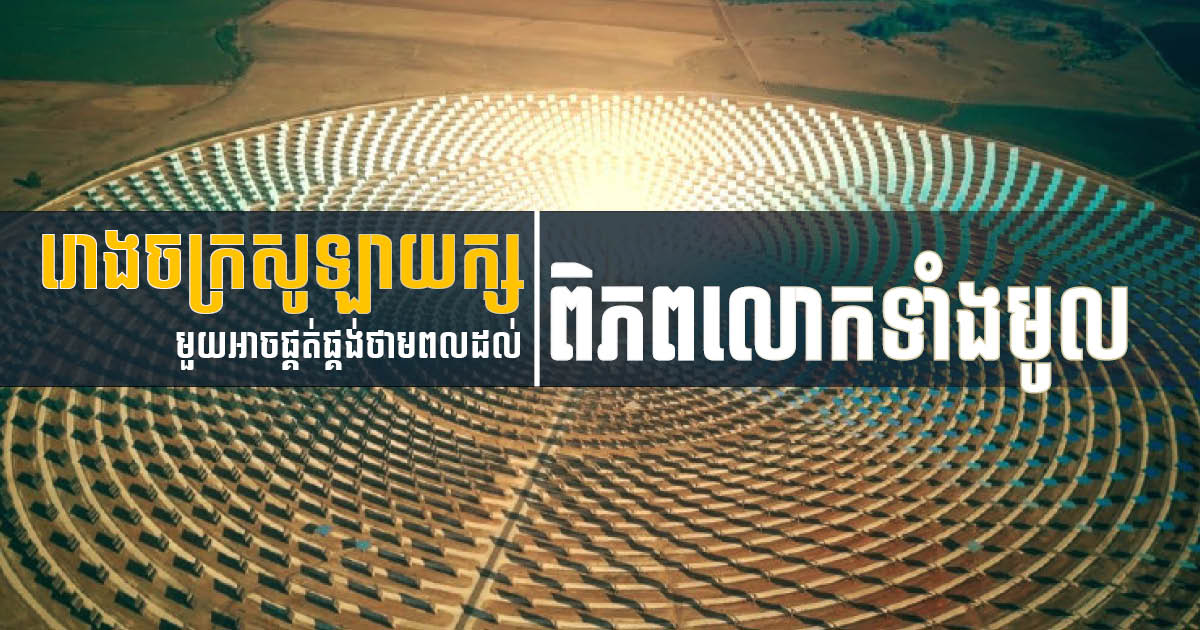
Photo: Aerial view of a large concentrated solar power plant. Novikov Aleksey/Shutterstock. Credit to the conversation.

Renewable energy from solar panels has now become one of the most popular energy alternatives. However, solar farm require large space and strong light. So, why don’t we build a large-scale solar farm on the world’s largest desert in the Sahara?

The Sahara Desert is the largest desert in the world with a total area of over 9.2 million square kilometres. Researchers have shown that if we build a solar farm covering only one-fourth of the desert, it will be more than enough to supply green energy to the entire world.

But here are the reasons why this project is yet to become reality:

1) Impact on Climate Pattern

According to data from The Conservation, covering the sand with solar panels will raise the ground temperature in the area. When the hot air rises, it will cause rainfall. With more monsoon rainfall, plants grow and the desert reflects less of the sun’s energy, which the loop will eventually turn the Sahara into a new green forest.

Sounds perfect, right? However, according to the same research, a change in climate pattern in the Sahara will affect the entire world’s climate. Those effects include the rise of the world’s temperature, the loss of rainfall in the Amazon, and more chance of cyclones and storms in tropical countries such as Vietnam.

2) Costly Investment

The construction of such a huge solar plant would require a large investment, which could be up to hundreds of billions of dollars. Besides the capital to build the farm, another main issue is power line infrastructure connecting the solar from to the whole world. This will be also a massive investment. Nevertheless, even building lines connecting to nearby regions such as Africa and Europe would still also require enormous capital.

3) Geopolitical issues

The Sahara is not located in one country but 11 countries. Such a big project requires the approval of each country, and those countries must cooperate. Given the large scale, the project would also take a very long time to build and operate. However, if any of those countries have political instability or face change in leaders, the project operation can be easily disrupted. As a result, investors would lose a lot of capital and power supplies would also be cut off. Besides, the geography of the desert is also very remote, which would take a lot of time and effort to transport solar panels in.

However, this idea is not a complete failure as Sahara-bordered countries such as Morocco have been building local solar plants there.

Known as the Noor Solow Power Plant, the project is divided into several phases. The first phase began in 2013 and was completed in 2016, while the second and third phases are under construction. The entire project will cover more than 2,500 hectares and is estimated to use a total investment of over US$2.5 billion. When completed, the plant will have a capacity of over 500MW and can supply power to more than 2 million people in Morocco.

- Video Advertisement -

Related Post

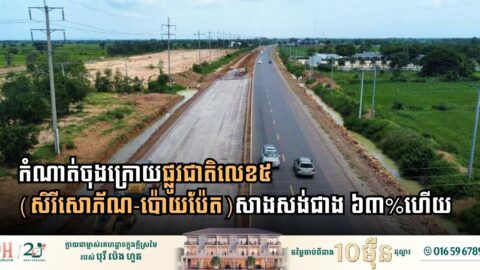
Final Section of Cambodia’s National Road 5 Reaches Major Construction Milestone

Achieving over 63 percent completion, the vital Serei Sophorn to Poipet corridor paves the way for seamless international trade and regional connectivity by 2027 The ambitious transformation of Cambodia’s transport network is rapidly nearing its final triumph as the restoration and quality upgrade of National Road 5 enters its last leg. By the end of […]

The Bassac River Bridge Nears Spectacular Completion to Transform Phnom Penh Infrastructure

Phnom Penh is rapidly advancing toward an era of unprecedented urban connectivity as the highly anticipated Bassac River Bridge construction project charges toward its final phases. As of early July 2026, this iconic twin concrete bridge connecting Chak Angre Krom and Prek Pra has achieved a spectacular 79% completion rate. This major milestone was underscored […]

A $117 Million Economic Lifeline: Prime Minister Hun Manet Inaugurates Newly Expanded National Road 7

The newly upgraded 4-lane highway connecting Skun and Kampong Cham town is projected to deliver a 15.27% economic return, slashing travel times and boosting agricultural trade… In a major boost to Cambodia’s internal logistics network, a vital 45.489-kilometer section of National Road 7 connecting the Skun roundabout to the Kizuna Bridge roundabout in Kampong Cham […]

Maritime Geopolitical Rivalry Intensifies as Vietnam Accelerates $4 Billion Deep Sea Port Project in the Far South

The massive infrastructure development on Hon Khoai Island serves as both an economic gateway for the Mekong Delta and a strategic maritime shield amid shifting regional dynamics Ho Chi Minh City: The geopolitical and trade landscape of Southeast Asia is entering a highly competitive phase as nations across the region race to build strategic advantages. […]

Field Assessments Underway for Kandal Province New Strategic Bridge

A joint delegation evaluates four potential sites for the Koh Khsach Tonlea crossing to enhance rural connectivity and market access In a significant step forward for Cambodia’s infrastructure development, a multi-institutional technical team has launched a comprehensive field survey to determine the optimal location for the upcoming Koh Khsach Tonlea Bridge project in Kandal Province. […]

Cambodia Completes Major Expansion of National Road 7 Connecting Skun and Kampong Cham

The $117 million infrastructure upgrade backed by China is set for an official inauguration by Prime Minister Hun Manet in July… The extensive upgrade of National Road 7, stretching over 45 kilometers to connect the hub of Skun with Kampong Cham town, has officially reached 100% completion. To mark this infrastructural milestone, a formal handover […]