 English
 ខ្មែរ


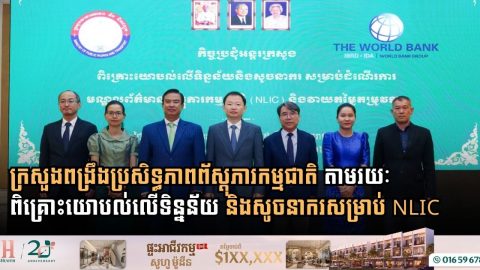
The Ministry strengthens national logistics efficiency through consultations on data and indicators
- 4 November 2026

Advancing Evidence-Based Policy Frameworks to Elevate Cambodia’s Logistics Competitiveness and Trade Integration Phnom Penh: Cambodia’s logistics and supply chain sector achieved a notable milestone as an inter-ministerial consultative meeting convened to review data and indicators for the operationalization of the National Logistics Information Center (NLIC) and conduct a comprehensive needs assessment, held on Friday, October […]
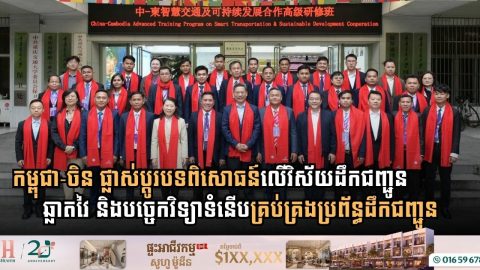
Cambodia and China Exchange Expertise on Intelligent Transport Systems and Modern Traffic Management Technologies
- 2 November 2026
A 25-member delegation from the Ministry of Public Works and Transport embarks on an advanced training program in China to master smart transport solutions, digital infrastructure management, and sustainable transit systems. Cambodia’s push toward modernizing its national transit infrastructure has taken a step forward as the Ministry of Public Works and Transport dispatched a delegation […]

Cambodia’s Intermodal Logistics Master Plan Requires $36.6 Billion Investment to Drive Economic Transformation
- 1 November 2026
Representing Cambodia at a high-level Belt and Road parallel forum in China, officials spotlight the visionary 174-project roadmap and the transformative impact of the Funan Techo Canal. Cambodia’s comprehensive master plan on the intermodal transport and logistics system for 2023–2033 requires an estimated investment capital of $36.6 billion to fully execute its wide-ranging infrastructure strategy. […]
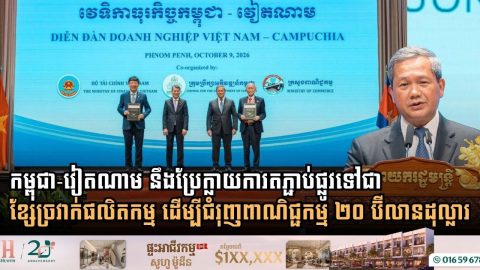
Cambodia and Vietnam Forge Ahead to Hit the $20 Billion Trade Target
- 20 October 2026
Turning physical infrastructure into synchronized industrial corridors to deepen bilateral economic integration. Cambodia and Vietnam are setting their sights on a more integrated economic future, pivoting from simple cross-border transit toward tightly linked production networks and industrial value chains. The strategic push aims to drive bilateral trade turnover toward an ambitious $20 billion milestone. The […]

JICA Targets Expansion in Physical Infrastructure, Logistics, and Japanese Direct Investment in Cambodia
- 18 October 2026
The Japan International Cooperation Agency has expressed a strong intention to expand its development cooperation with Cambodia, focusing on building physical infrastructure, advancing logistics system development, and channeling additional foreign direct investment from Japan to the Kingdom. The strategic dialogue took place on Friday, October 2, 2026, during a high-level meeting between H.E. Sun Chanthol, […]
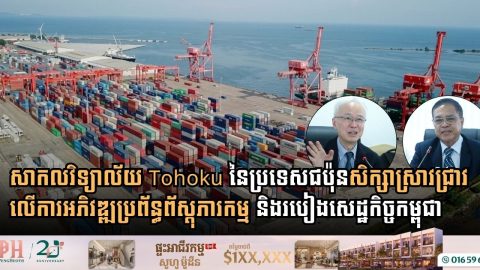
Japan’s Tohoku University Research on Cambodia’s Logistics Systems and Economic Corridor Development
- 8 October 2026
MPWT Undersecretary Vasim Sorya meets Japanese delegation led by Professor Yukiharu KOBAYASHI to review JICA-backed logistics initiatives and cross-border transport strategies Phnom Penh: Modernizing national logistics networks and optimizing key economic corridors remain fundamental drivers for lowering transport costs and strengthening Cambodia’s regional competitiveness. On September 30, 2026, at the Ministry of Public Works and […]