Singapore’s AI-Driven Tuas Port: The World’s Largest Automated Trade Hub on the Horizon

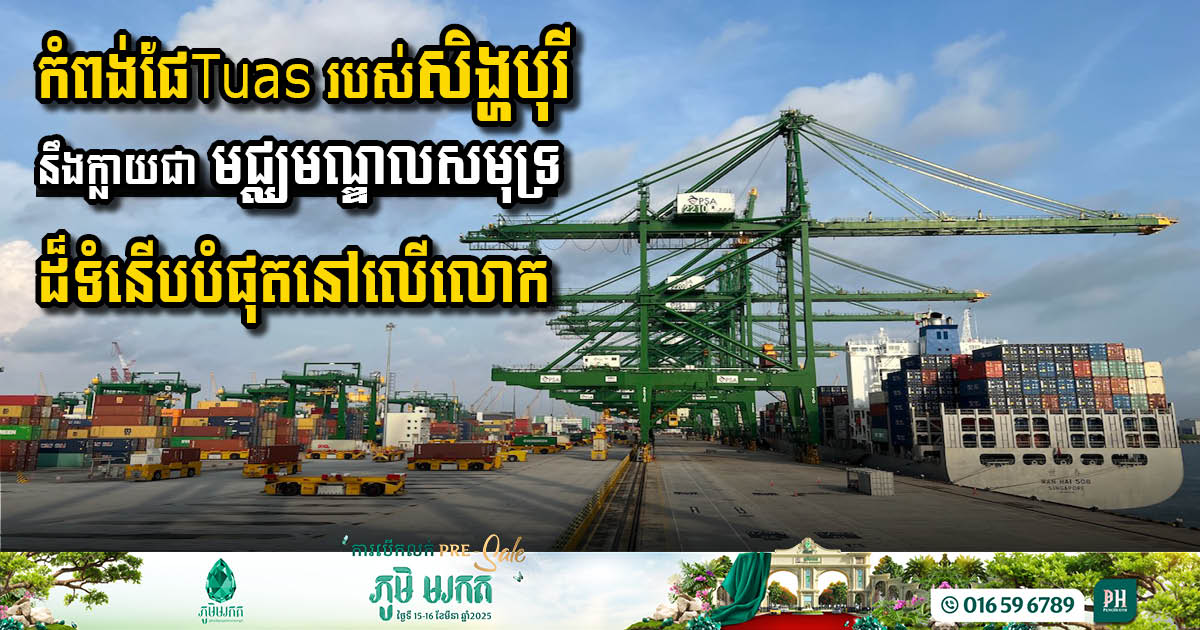
Singapore is set to redefine global maritime trade with the development of Tuas Port, a fully automated, AI-powered logistics hub that will consolidate the city-state’s port operations into a single, record-breaking facility. The ambitious project is expected to boost Singapore’s cargo-handling capacity to an unparalleled 65 million twenty-foot equivalent units (TEUs) upon completion in the 2040s, surpassing Shanghai’s current 50 million TEUs.

This transformation positions Singapore as the world’s largest automated port and strengthens its role as a leading global trade hub. The Maritime and Port Authority (MPA) reported that in 2024 alone, Singapore handled a record 41.12 million TEUs, marking a 5% annual increase. The initiative is being spearheaded by PSA International, Singapore’s state-backed port operator, which has committed to delivering cutting-edge infrastructure that will drive efficiency, security, and sustainability in global shipping, according to Asia.nikkei on 23 February 2025.

Tuas Port is designed to operate with minimal human intervention, leveraging advanced automation to enhance efficiency and security. A fleet of yellow automated guided vehicles (AGVs) navigates the port’s vast terminals 24/7, reaching speeds of up to 25 kilometres per hour. These vehicles are remotely operated, equipped with RFID systems that communicate with underground transponders for precise location tracking. According to PSA International, the AGVs can run continuously for six to eight hours on a single 20-minute automated charge, enabling seamless, uninterrupted cargo movement.

The automation extends beyond cargo handling. Tuas Port is implementing a “Next Generation Vessel Traffic Management System” powered by artificial intelligence and satellite technology. This system provides real-time monitoring of ship movements, optimising berth allocation and preventing congestion. The government’s Smart Nation 2.0 strategy, launched on 1 October 2024, showcased satellite-based vessel tracking, with ships color-coded by type to streamline operations. AI-driven analytics are expected to further enhance port security, protecting against cyber threats and optimising logistical workflows.

Singapore’s strategic location as a maritime gateway between East and West has made it a vital trans-shipment hub since the 19th century. Today, the city-state remains the world’s second-largest port by cargo volume, facilitating the transfer of goods from smaller regional vessels onto larger ships destined for Europe and the United States.

The consolidation of all major port operations into Tuas represents a historic shift, ensuring Singapore retains its competitive edge in global trade. As Tuas Port continues to take shape, its impact on the global logistics landscape is becoming increasingly evident. “Tuas will be the port of the future,” declared former Prime Minister Lee Hsien Loong during the opening of the port’s first phase in 2022.

Environmental sustainability is another cornerstone of the Tuas Port project. Singapore aims to achieve net-zero greenhouse gas emissions by 2050, and electrified port equipment, including AGVs, plays a crucial role in meeting this target. According to the Transport Ministry, these automated electric vehicles reduce carbon emissions by approximately 50% compared to traditional diesel-powered alternatives. PSA International is also actively partnering with start-ups and research institutions through its recently revamped venture capital arm, fostering innovation in sustainable maritime technologies.

With its world-leading capacity, unparalleled automation, and focus on sustainability, Singapore’s Tuas Port is set to become the most advanced maritime hub on the planet, redefining the future of global trade and logistics.

- Video Advertisement -

Related Post

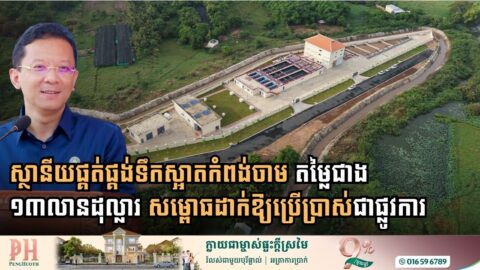
Kampong Cham Welcomes New $13 Million Clean Water Facility to Boost Public Health

The provincial capital of Kampong Cham has marked a significant milestone in its urban development with the official inauguration of a major clean water supply station valued at over $13 million. The newly operational infrastructure asset is designed to address the region’s rapidly growing water demands while systematically elevating public health standards, supporting local commercial […]

Water Infrastructure Expansion Gains Momentum in Kampong Cham

The ongoing efforts of the Royal Government of Cambodia to modernize its agricultural water infrastructure have marked another significant step forward, with the restoration of the Svay Meas Canal in Kampong Cham province reaching 55 percent completion. Spanning across crucial agricultural zones, the rehabilitation project is designed to provide sustainable water management and irrigation to […]

Bakheng Water Treatment Plant Expansion Crosses Major Threshold to Secure Capital Clean Water Access

Phase Three Progress Surpasses Seventy % Mark as Cambodia Broadens Utility Infrastructure to Support Rapid Economic Growth The ongoing construction of the Bakheng Water Treatment Plant Phase Three has achieved a significant milestone, with the project now certified as more than 70 % complete. This infrastructure expansion is poised to critically enhance the water distribution […]

Cambodia Accelerates Toward Universal Access to Rural Water and Sanitation

Cambodia has recorded a significant leap forward in its nationwide initiative to uplift rural public health and living standards, with basic clean water supply coverage expanding to reach nearly 90% of the population by the end of 2025. Alongside this baseline progress, safely managed water services, which guarantee higher standards of filtration, testing, and consistent […]

Digital Twin Solutions Turn Water Utility Compliance into Efficiency

Water utilities worldwide are facing a perfect storm of aging infrastructure, rising costs, and tightening global regulations. To combat these challenges, Bentley Systems is helping providers transition from reactive “break-fix” cycles to proactive, data-driven management through its advanced water utility digital twin solutions. Many utilities currently struggle with “data fog,” where critical information is trapped […]

Cambodia’s Strategic Dong Kambit Reservoir Project Reaches 90% Completion Milestone in Kampong Thom

The construction of the Dong Kambit Reservoir, a cornerstone water management project in Kampong Thom province, has officially achieved approximately 90% completion. This progress was detailed following a comprehensive site inspection on March 27, 2026, led by His Excellency Chuon Bithol, Undersecretary of State at the Ministry of Water Resources and Meteorology and Director of […]